
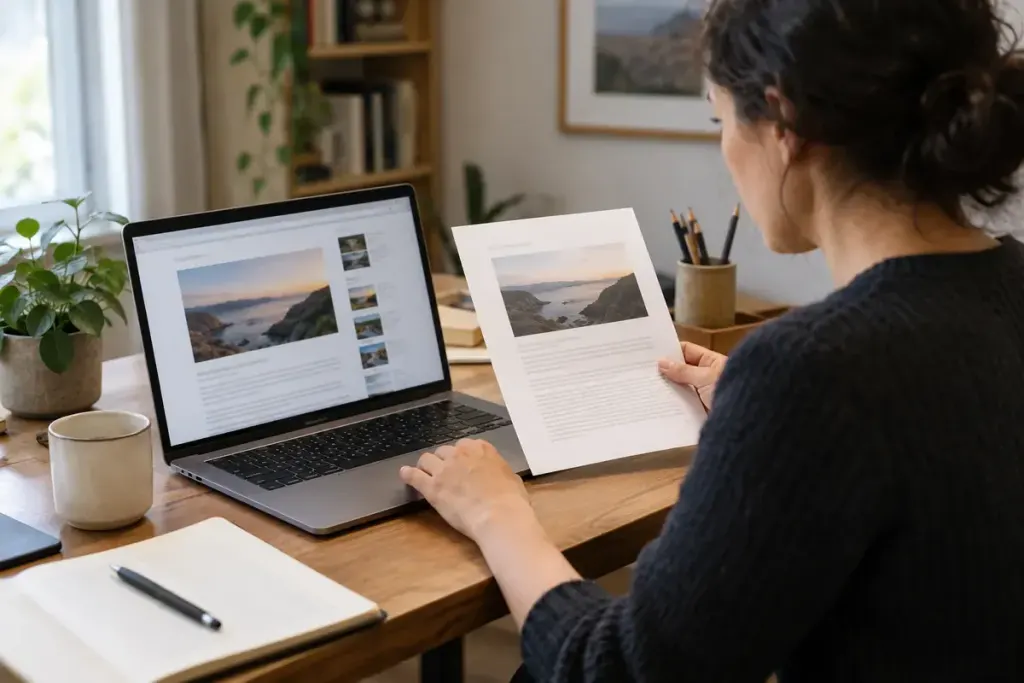
A web article can be easy to read on screen and awkward on paper. Navigation occupies the first page, a fixed banner covers text and the final paragraph is cut off inside a scrolling panel. A print stylesheet gives the printed version its own deliberate layout.
Begin with the content the reader needs to keep. The article title, body, publication context and useful references usually matter more than search controls, menus or floating sharing buttons.
Create a small print-specific layer
MDN’s printing guide describes print media styles. Use a print media query to adjust the page. Hide purely interactive controls, remove unnecessary fixed positioning and allow content containers to expand. Keep contrast readable when background colours or images are not printed.
Do not hide an entire sidebar blindly if it contains a necessary warning or reference. Classify elements by purpose rather than by their screen location.
Test awkward content
Check long headings, tables, images, quotations and lists. Avoid forcing every small component onto a separate page. Use break controls carefully and inspect what the browser actually produces, because pagination can differ across engines and paper sizes.
For links that need to survive on paper, consider a readable address or reference treatment. Long raw URLs can overwhelm a narrow column, so test representative examples instead of appending every address without thought.
Preview at least a short article and a long one, then print to PDF and inspect the complete document. Look for missing text, blank pages and clipped content. A screen screenshot cannot validate the printed result.
Keep the print rules close enough to the component styles that later design changes prompt a review. The goal is a document someone can read and use after leaving the website. A modest set of tested print rules often does more for that experience than adding decorative elements to an already crowded page.